Introduction
Do you ever feel like you’re studying for hours but not really getting anywhere? You’re not alone. Many students spend countless hours hitting the books, only to feel frustrated when the results don’t match the effort. In today’s fast-paced academic environment—where time is limited and expectations are high—studying effectively is more important than ever.
With the right strategies, you can make your study sessions shorter, more focused, and far more productive. In this post, we’ll explore practical, science-backed techniques to help you study smarter, not harder. From time management hacks to proven memory-boosting methods, we’ve got you covered. Let’s dive in and transform the way you study.
Definition of Effective Study Tips

Effective study tips are practical strategies and techniques designed to help you learn more efficiently, retain information better, and perform well academically with less wasted time and effort.
The key difference between simply studying and studying effectively is that effective studying focuses on quality over quantity. Instead of just spending hours reading or highlighting, it involves using proven methods that actively engage your brain—like testing yourself, organizing information, and managing your time wisely.
Using effective study strategies is essential because it not only boosts your understanding and memory but also reduces stress, improves your grades, and frees up time for other important activities. In short, effective studying helps you work smarter and achieve greater academic success.
The Science Behind Effective Studying
Understanding how memory and retention work can help unlock the secret to studying effectively. Our brains don’t just absorb information passively; they need attention, repetition, and active engagement to store knowledge long-term.
When you focus your attention, your brain encodes information more deeply, making it easier to recall later. Repetition strengthens these memory connections, but not all repetition is equal—spacing out your study sessions over time (known as spaced repetition) is far more effective than cramming.
Active learning—such as testing yourself, summarizing concepts, or teaching others—forces your brain to retrieve and process information, which reinforces memory and understanding.
Psychological principles like cognitive load theory remind us that our working memory has limited capacity. Overloading it with too much information at once can hinder learning, so breaking study material into manageable chunks is key. Combined, these scientific insights form the foundation of strategies that make studying truly effective.
Key Characteristics of Effective Study Tips
- Time-efficient and focused
Effective study tips help you make the most of your limited time by minimizing distractions and encouraging deep concentration on specific tasks, so you learn more in less time. - Goal-oriented and measurable
They are designed around clear objectives—whether it’s mastering a concept or preparing for an exam—and include ways to track your progress, helping you stay motivated and on target. - Aligned with personal learning styles
Since everyone absorbs information differently, effective strategies can be adapted to fit your unique preferences, whether you learn best through visuals, listening, writing, or hands-on practice. - Realistic and sustainable over time
Lastly, effective study tips are practical and easy to maintain consistently, avoiding burnout by balancing intensity with regular breaks and manageable workloads. This ensures you build lasting habits for academic success.
Top Effective Study Tips
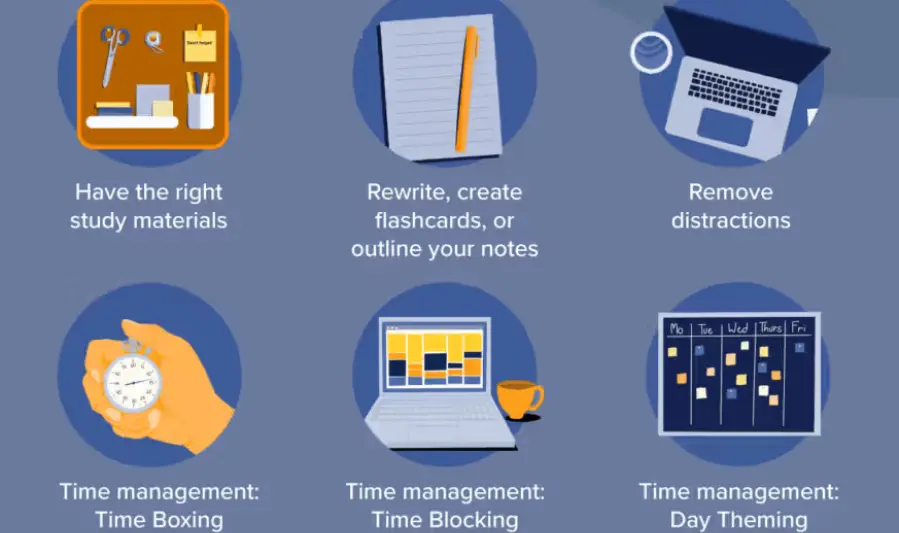
- Set SMART Goals for Your Study Sessions
Define Specific, Measurable, Achievable, Relevant, and Time-bound goals to keep your study focused and purposeful. Instead of vague targets like “study math,” aim for “complete 3 algebra problems in 30 minutes.” - Use Active Recall and Self-Testing
Rather than just rereading notes, quiz yourself regularly. This active retrieval strengthens your memory and helps identify areas that need more work. - Practice Spaced Repetition
Spread out your study sessions over days or weeks instead of cramming. Revisiting material at increasing intervals boosts long-term retention. - Try the Pomodoro Technique
Study in focused bursts of 25 minutes followed by short 5-minute breaks. This method keeps your mind fresh and improves concentration. - Create a Realistic and Consistent Study Schedule
Plan study times that fit your daily routine and stick to them. Consistency builds momentum and reduces last-minute stress. - Minimize Distractions and Improve Your Environment
Choose a quiet, organized space for studying. Turn off notifications and remove anything that might divert your attention. - Summarize or Teach the Material to Someone Else
Explaining concepts in your own words—whether by writing summaries or teaching a friend—deepens understanding and uncovers gaps in knowledge. - Use Visual Tools Like Mind Maps or Diagrams
Visual aids help organize information, making complex ideas easier to grasp and remember. - Maintain a Healthy Routine (Sleep, Diet, Exercise)
Good physical health supports mental performance. Prioritize quality sleep, nutritious meals, and regular exercise to keep your brain sharp. - Join Study Groups or Use Study-Focused Apps
Collaborating with peers or leveraging apps designed for learning can provide motivation, new perspectives, and helpful resources.
Common Study Mistakes to Avoid
- Cramming at the Last Minute
Trying to absorb everything in one intense session may seem efficient but often leads to poor retention and high stress. Instead, spread your study over time with consistent review. - Passive Reading or Highlighting Without Engagement
Simply reading or highlighting text doesn’t actively involve your brain. Without testing yourself or summarizing, the information is less likely to stick. - Multitasking While Studying
Switching between tasks like checking your phone or listening to music with lyrics divides your attention, reducing the quality of your study and making it take longer. - Ignoring Difficult Topics
Avoiding challenging material only makes it harder later. Facing tough topics head-on, perhaps with extra help or different resources, builds stronger understanding. - Studying for Too Long Without Breaks
Long, uninterrupted study sessions can lead to burnout and diminishing focus. Taking regular breaks—like using the Pomodoro Technique—helps maintain energy and concentration.
How to Personalize Your Study Strategy
- Understand Your Learning Style
Identify whether you learn best by seeing (visual), hearing (auditory), doing (kinesthetic), or a combination. Tailoring your study methods—like using diagrams for visual learners or discussing concepts aloud for auditory learners—can boost effectiveness. - Reflect on Which Techniques Have Worked for You in the Past
Think about past study sessions: When did you feel most engaged or confident? Which methods helped you remember information best? Use these insights to guide your approach. - Keep Track of What Works and Adjust Your Strategy as Needed
Experiment with different techniques and monitor your progress. If something isn’t helping, tweak it or try a new method. Personalizing your study plan is an ongoing process that adapts to your needs and goals.
you may also like to read these posts:
Comparing Group Study and Self Study: Benefits and Best Uses
Best Business Computers in 2025: Performance & Reliability
Powerful & Compact: Best Portable Mini PCs for Work
Understanding Effective Study Tips
Tools and Resources for Effective Studying
- Study Planning Tools
Keep your study sessions organized and on track with apps like Notion, Google Calendar, and Todoist. These tools help you schedule tasks, set reminders, and prioritize your workload efficiently. - Flashcard Apps
Leverage digital flashcards with apps like Anki and Quizlet. They use spaced repetition to help reinforce your memory and make self-testing simple and effective. - Online Learning Platforms
Explore a variety of subjects through platforms such as Khan Academy, Coursera, and educational YouTube channels. These resources offer video tutorials, quizzes, and courses to deepen your understanding. - Note-Taking Tools
Use tools like Evernote and OneNote to capture, organize, and review your notes seamlessly across devices. These apps allow you to create searchable, structured notes that are easy to revisit.
Final Thoughts
Studying effectively is the key to making your academic efforts truly count. It’s not about how many hours you spend, but how strategically you use that time to learn and retain information. By experimenting with different study tips and finding what works best for you, you can build a personalized approach that fits your style and goals.
Remember, consistency is crucial—regular, focused practice beats last-minute cramming every time. Smart studying helps you achieve better results with less stress, giving you more time and energy for the things you love.
So, start small, stay curious, and keep refining your methods. Your future self will thank you!
Call to Action
What are your favorite study tips? Share them in the comments below—we’d love to hear what works best for you!
If you found these strategies helpful, be sure to subscribe or follow for more practical advice and educational content to boost your learning journey.
And to help you get started, grab our free Study Planner and Checklist—designed to keep your sessions organized and focused. Just click the link below to download!
Faqs:
What makes a study tip “effective”?
An effective study tip is one that helps you learn and retain information better in less time. It should improve your focus, understanding, and memory, making your study sessions more productive.
How long should a study session be for maximum effectiveness?
Many experts recommend studying in focused intervals of 25 to 50 minutes, followed by short breaks (like the Pomodoro Technique). This helps maintain concentration and prevents burnout.
Can effective study tips work for every subject?
While some strategies work broadly (like active recall or spaced repetition), it’s important to tailor your approach depending on the subject and material. For example, memorization techniques may work better for languages, while practice problems are key for math.
How do I know which study tips work best for me?
Try different strategies and pay attention to how well you understand and remember the material. Everyone has different learning styles, so personalize your methods based on your experience and comfort.
Is it better to study alone or in a group?
Both have advantages. Studying alone helps you focus deeply, while group study encourages discussion and clarifies doubts. Use a mix of both depending on the topic and your preference.
Conclusion
Effective study tips are more than just tricks—they are proven strategies that help you learn smarter, retain information longer, and perform better academically. By setting clear goals, actively engaging with your material, managing your time wisely, and creating a distraction-free environment, you can transform the way you study. Remember, the key is consistency and finding the methods that work best for you. Start applying these tips today, and watch your confidence and results improve over time. Happy studying!